The College of Nurses of Ontario (CNO) has a duty to protect the public by promoting safe nursing practice.
As part of its public protection mandate, CNO has a process to make a complaint about a nurse’s practice or conduct. This page explains that process. There is a separate process for an employer, facility operator or health professional to submit a report about a nurse. They should follow the instructions for filing a report.
Who can make a complaint
Complaints can be made by patients, their family members, caregivers or anyone who has a concern about the care and treatment by a nurse or a nurse’s conduct. You do not have to be a nurse’s patient to make a complaint about them. A complaint cannot be made anonymously.
What you can make a complaint about
CNO will address complaints about a nurse’s professional conduct or nursing practice. For example, complaints about:
- patient care
- unprofessional behaviour
- privacy or confidentiality
- patient abuse
CNO cannot address complaints:
- about the facility where the nurse works
- about a personal issue with a nurse, not related to their nursing role
- that fall outside CNO’s role as Ontario’s nursing regulator
- that are made anonymously, if CNO cannot get any further information
Before you make a complaint
Before you make a complaint, you may want to try to resolve your concerns directly with the nurse, where appropriate, or with their employer.
If your concern is about a public hospital, long-term care home or home and community care service organization, you can get in touch with the Ontario Patient Ombudsman. The Patient Ombudsman’s role is to address complaints about a person’s experience at these facilities and organizations.
If you make a complaint, please provide the name of the nurse or nurses. CNO must be able to identify the nurse(s) the complaint is about.
How to file a complaint
Step 1: Learn about the complaints process
Read the Addressing Complaints at the College of Nurses of Ontario guide, which includes helpful information on completing the form.
Step 2: Complete the Make a Complaint form
There are two versions of the Make a Complaint form: an online form and a downloadable MS Word form.
To make a complaint using the online form, use the Make a Complaint online link.
To make a complaint using the MS Word form, follow these steps:
Details of the complaint can be written or recorded (audio or video) and should include:
- the name and complete contact information of the person making the complaint, called the complainant
- the concerns you have about the nurse or nurses, including the date the issue took place, the name of the facility and the name of the nurse or nurses involved.
Having this information on hand will make it easier to fill in the complaint form.
What happens after you make a complaint
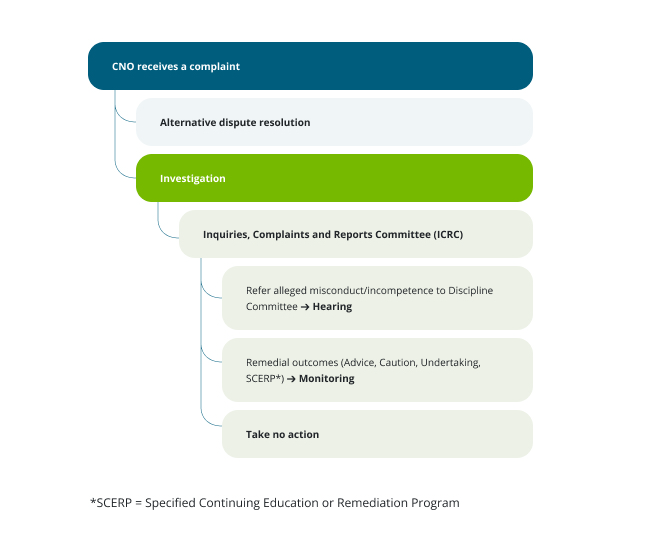
1. Contacting the complainant and the nurse(s)
CNO will contact you to acknowledge that we have received your complaint, explain the complaints process and gather more information about your concerns.
CNO will also notify the nurse or nurses named in the complaint, informing them of the complaint and explaining the process. CNO staff do not represent the complainant or the nurse involved in the complaint. CNO staff will provide you with process information and support. CNO does not offer legal advice to either the complainant or the nurse.
2. Alternative dispute resolution
The fastest way to resolve a complaint is through a process called alternative dispute resolution. Using this process tends to lead to better experiences for both complainants and nurses because it is timely, and the complainant and nurse participate in achieving an outcome.
Alternative dispute resolution can be used only if the complainant and nurse consent to it. If they consent, a CNO investigator speaks with the complainant, then the nurse, and supports them to come to an agreement to resolve the complainant’s concerns. The communications and records in alternative dispute resolution are confidential and cannot be used in other proceedings. The Inquiries, Complaints and Reports Committee reviews and approves the signed resolution agreement, if it is in the public interest.
Alternative dispute resolution is an eligible pathway to address many complaints. However, it cannot be used for complaints that involve concerns about sexual abuse, conduct that may present a moderate or higher risk to the public, or for a complaint that has already been investigated and referred to the Discipline Committee.
3. Investigating the complaint
When a complaint cannot be resolved through alternative dispute resolution, it goes through the investigation process.
A CNO investigator gathers information about the concerns raised in the complaint. They obtain information from the complainant and may also interview witnesses and compile information, including records, related to the complaint.
The investigator notifies the nurse about the complaint and gives them an opportunity to respond to the concerns. By law, the nurse must have at least 30 days to respond.
4. Reviewing the complaint
The Inquiries, Complaints and Reports Committee (ICRC) oversees CNO’s investigations. ICRC is composed of experienced nurses and government-appointed members of the public. ICRC reviews the information obtained in an investigation, including the nurse’s response, and decides what action to take.
Neither the complainant nor the nurse (or nurses) attend the ICRC meeting.
The ICRC can do any one or more of the following:
- take no action
- issue advice to the nurse about their practice and conduct
- require the nurse to appear before a panel of the ICRC for a caution, a meeting with the nurse to discuss the issues, receive guidance and support practice reflection to avoid similar issues in future.
- require the nurse to complete a Specified Continuing Education or Remedial Program (SCERP) to improve their practice
- accept a remedial undertaking, a voluntary and formal promise by the the nurse to complete education and practice reflection to improve their practice
- refer specific allegations of professional misconduct or incompetence to the Discipline Committee
The ICRC is required to provide a copy of its decision and reasons to the complainant and to the nurse and advise them of their right to request a review of the decision by an independent body called the Health Professions Appeal and Review Board (HPARB).
Contact us
If you have questions about the complaint process or the form, please:
CNO is committed to making the complaints process accessible. Please contact us for more information or to request support in filing a complaint.
Respectful behaviour
Respect is the foundation of our complaints process. We will treat you with respect, dignity and patience, and we expect the same in return. We know this is an emotional experience, but please be mindful of your behaviour and how you’re treating others when communicating with CNO staff.
Related links